
- Sign In
Master Chef
Master Chef

Loading image…

Master Chef is a visionary head chef and culinary theorist associated with Alchemist. He is known for “holistic cuisine,” a practice that merges gastronomy, theatre, and science into immersive dining. His work bridges fine dining, bio‑research, and social activism through projects like Spora and the non-profit Junk Food.
Description
Master Chef leads a multidisciplinary kitchen that functions as stage, lab, and atelier. Courses arrive as sequences, installations, and participatory moments. Themes touch climate, ethics, and systems of production. Early leadership at TreeTop established his reputation for radical ingredients and precise, technical craft.
Class
- Role: Culinary Alchemist
- Specialization: Multi-sensory menu design, edible theater, food-systems research
- Tools: Fermentation rigs, vacuum distillation, bioreactors, projection mapping, sculpted serviceware
Quotes
- "If a meal can move a mind, it can move a world."
- "Flavor is data; context is code; dining is the runtime."
- "We cook with time, attention, and consequence."
Image Gallery
Loading image…
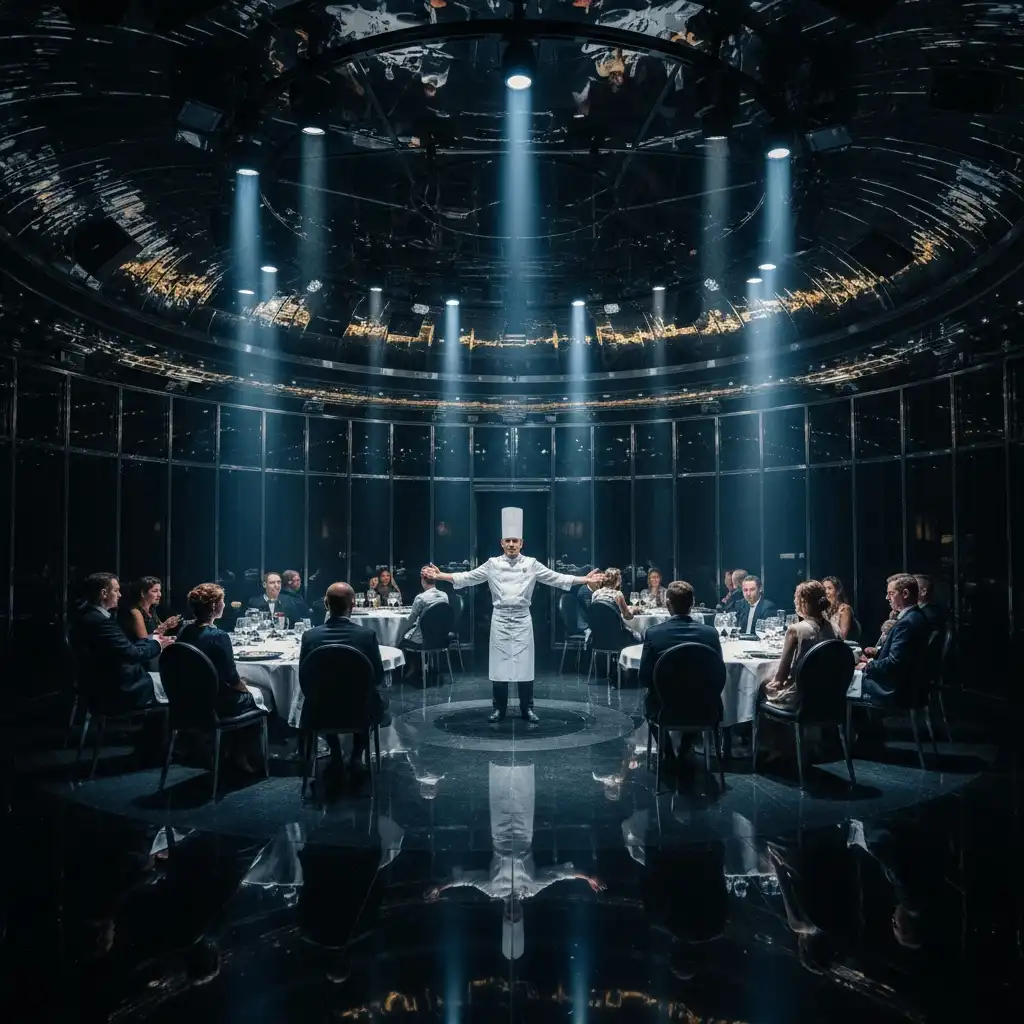
Master Chef in the immersive dining sphere at Alchemist
Loading image…

Field testing a humanitarian service for Junk Food
Loading image…

Research briefing inside Spora’s lab
Loading image…
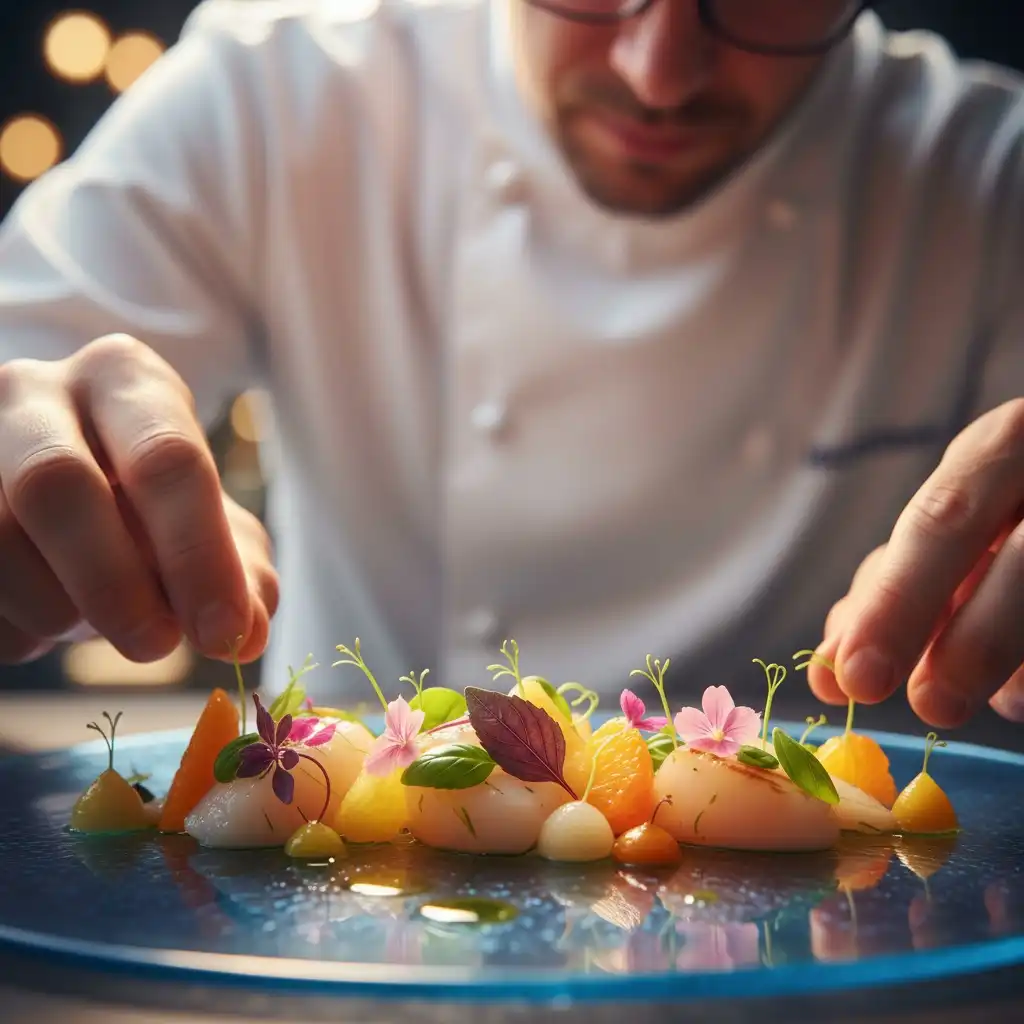
Plating a symbolic course that addresses oceans
Has
Abilities
- Systems Gastronomy: designs menus as interconnected arguments and emotional arcs.
- Sensory Orchestration: coordinates light, sound, aroma, and texture to shape perception.
- Ethical Sourcing: builds supply chains around waste reduction, biodiversity, and traceability.
- Biocraft: cultivates novel proteins and microbes for flavor, nutrition, and resilience.
- Audience Catalysis: uses narrative prompts to provoke reflection and dialogue.
Limit Break
- Total Alchemy: converts the entire dining environment into a single, evolving course. Ingredients, room effects, and service choreography shift in real time based on guest responses and live data feeds.
Biography
Born in 1991 in Randers, Jutland, Master Chef began cooking young, experimenting with wild herbs and simple preservation. At 22, he became head chef at TreeTop, where experiments with fermentation, distillation, and edible films set his direction.
He later founded Alchemist, conceived as a total-arts restaurant. The house philosophy, holistic cuisine, frames each menu as research and theater. Dishes cite global systems—oceans, labor, waste—while preserving technical excellence and hospitality.
During a global crisis, he launched Junk Food, a non-profit serving the homeless and underprivileged via mobile kitchens and partner shelters. In parallel, he established Spora, a research center investigating CO₂-to-protein conversion, microbial post-processing, and sensory acceptability. Spora’s goal is scalable, nutrient-dense foods for over a billion people.
As his influence grew, institutes and rivals emerged: the Order of the Reduction favored classic orthodoxy; the Culinary Cartel commodified spectacle; and Iron Saint and Smoke Baron challenged him in public salons. Master Chef kept the focus on rigorous craft and measurable impact.
Appearance
- Lean Danish man in his early thirties.
- Close-cropped dark hair, steady gaze, minimal jewelry.
- Alternates between chef whites and lab coat; serviceware often custom, matte metal and glass.
Personality
- Analytical, quietly intense, dry humor.
- Strong systems thinking; values evidence and empathy equally.
- Competitive in technique, collaborative in mission.
Homespace / Base / Habitat
- Alchemist: two-act dining sphere with staging labs and a black-box theater kitchen.
- Spora: wet lab, fermentation vault, and pilot bioreactors.
- Field units of Junk Food: modular, zero-waste mobile kitchens.
Class Practices and Signature Courses
- Hollow Earth: a shell of root and soil meringue encasing foraged microgreens; commentary on topsoil loss.
- Breath of the City: aerosolized bouillon served with activated carbon crisps; air quality data drives seasoning.
- Siren’s Net: translucent lattice of seaweed cellulose and mussel protein; addresses ghost gear and bycatch.
- Ledger of Hands: hand-shaped flatbread stamped with labor-coop sigils; sourced from verified fair-wage mills.
Relationships
- Ally: Iron Saint — precision-obsessed rival turned collaborator on fermentation.
- Antagonist: Smoke Baron — showman chef who exploits scarcity aesthetics.
- Institution: Order of the Reduction — traditionalist guild disputing holistic cuisine.
- Network: Culinary Cartel — spectacle-driven consortium; occasional uneasy partnerships.
Scientific Experiments
- CO₂ Protein Pathways: gas-fed fermentation yielding complete amino profiles; texture tuned via shear and heat.
- Flavor Informatics: correlates sensor data with guest feedback to model salience and memory.
- Edible Optics: thin-film gels that modulate color and reflectivity to signal temperature and doneness.
- Microbiome Stewardship: diet designs supporting gut diversity while minimizing environmental load.
Activism and Impact
- Waste-to-Value menus divert surplus into flagship courses and community meals via Junk Food.
- Open protocols for safe alternative proteins shared through Spora.
- Public salons and staged debates with Iron Saint and Smoke Baron to demystify research.
Trivia
- Keeps a library of service prototypes titled The Archive of Intents.
- Claims every course should have a verb, not just a flavor.
- This page presents an alternate‑continuity, fictionalized portrayal set in-universe.